Ship Tank Cleaning vs Industrial Tank Cleaning: A Complete Guide
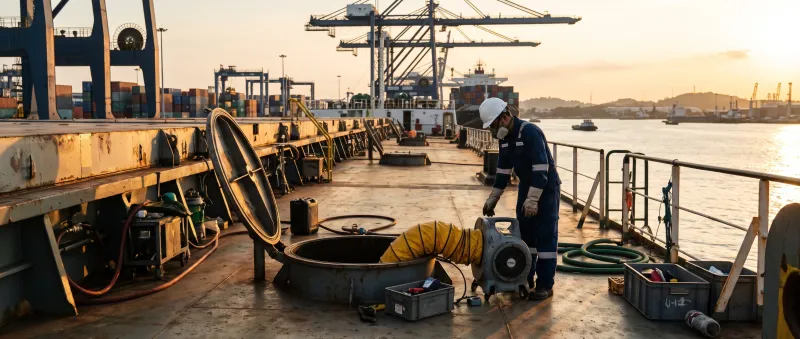
Table of Contents
- Why Ship Tank Cleaning Differs from Industrial Tank Cleaning
- Confined Spaces: Similarities That Need Caution
- Types of Waste and Terms You Need to Understand
- Waste Transport: Sea for Ships, Land for Industry
- The Importance of Manifest Documents and Treatment Certificates
- Practical Tips Before Choosing a Tank Cleaning Service
- Consult Your Tank Cleaning Needs
Ship tank cleaning and industrial tank cleaning often look similar because both involve cleaning narrow, hazardous enclosed tanks. However, for Ship Tank Cleaning and industrial tanks, the working methods, types of waste, and transport workflows differ in ways that are important to understand.
This article discusses these differences in a neutral and practical way. The goal is for you, whether a ship owner, facility manager, or industry operator, to understand what needs to be prepared before work begins.
Why Ship Tank Cleaning Differs from Industrial Tank Cleaning
Ship tanks are designed to hold various cargoes and liquids during voyages. Each tank has a different cargo history, so the condition of the sediment inside also varies. This factor is why the cleaning process needs to be adapted.
Industrial tanks, such as fuel storage tanks or factory process tanks, are usually located in one fixed place. Their contents are relatively more consistent, and the working environment is easier to predict. Even so, both still require careful planning.
Differences in location also affect logistics. Work on ships is often carried out at ports, shipyards, or specific waters, while industrial tanks are generally located on land with existing vehicle access.
Confined Spaces: Similarities That Need Caution
Both ship tank cleaning and industrial tank cleaning are classified as work in confined spaces. Spaces like these have minimal ventilation, so the air inside may contain hazardous gases or lack sufficient oxygen.
Therefore, before entry, the team needs to test the air, ensure ventilation is working, and assign a supervisor outside the tank. Entry and exit procedures must also be clearly recorded so that everyone on site knows the working conditions.
This caution should not be treated as a formality. Many risks in enclosed spaces appear suddenly, so procedural discipline is an essential part of work safety.
Types of Waste and Terms You Need to Understand
In the world of tank cleaning, there are several terms that often come up. Understanding them helps you assess work requirements more accurately.
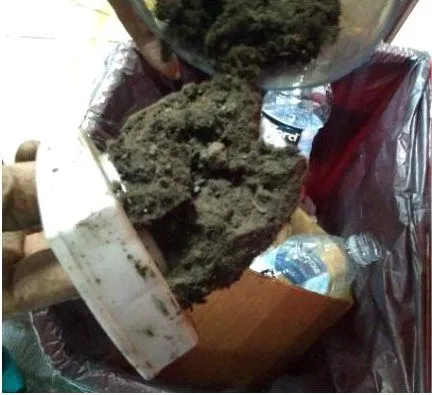
- Tank Fuel Storage: fuel storage tanks, both onshore and on ships. The sediment that forms is usually sludge resulting from oxidation and water contamination.
- Bilges Water: water that collects at the bottom of a ship's engine room or hull, mixed with oil, lubricants, and other dirt.
- Black Water: wastewater from ship toilets containing feces and urine.
- Air Kotor Tinja: a general term for domestic liquid waste contaminated with human waste, which is also a concern in ship systems.
Each type of waste has different hazard levels and handling methods. Bilges water and black water, for example, must not be discharged carelessly and must be managed in accordance with applicable regulations.
Waste Transport: Sea for Ships, Land for Industry
One of the most distinct differences lies in the transport of the sludge produced by cleaning. For ship tank cleaning, the collected waste needs to be transported by sea vessels to a licensed receiving facility.
For industrial tanks, transport is generally carried out by land using waste transport vehicles. This route is usually simpler, but it must still meet licensing and recording requirements.
In both types of work, waste must not be sent by parties without a permit. The responsible service provider will ensure that the entire transport chain is carried out by legitimate partners.
The Importance of Manifest Documents and Treatment Certificates
Every tank cleaning transaction should ideally be accompanied by verifiable evidence. A manifest document serves as the travel record of waste, from the generator, to the transporter, to the recipient or destroyer.
A treatment certificate complements this document by explaining the type of handling carried out. The combination of both helps facility owners prove that waste has been managed in accordance with regulations.
When you request a quotation, also ask which documents will be received once the work is completed. This is important for internal audits as well as inspections by the authorities.
Practical Tips Before Choosing a Tank Cleaning Service
- Determine the type of tank and its cargo history, as this affects the cleaning method.
- Request a survey first so that the scope of work and cost estimate are clear.
- Make sure the service provider has written confined space safety procedures.
- Ask about the waste transport process and which licensed partner is involved.
- Request the manifest document and treatment certificate as proof of work.
If your needs include routine water tank cleaning, you can also read about our services at water tank and reservoir cleaning services in Batam. For building facility needs, HVAC and ducting maintenance services are also available.
Consult Your Tank Cleaning Needs
Every ship and industrial facility has different conditions, so the best solution always depends on a field survey. Our team in Batam, Karimun, and Bintan is ready to help you understand the scope of work clearly before you decide.
For surveys and quotations, you can contact us via WhatsApp during working hours, Monday to Saturday, 08.00 to 17.00 WIB. Our admin team will help schedule the survey and explain the workflow transparently.
FAQ
Do ship tank cleaning and industrial tank cleaning require the same safety procedures?
Both are confined space work and must follow strict safety procedures, such as air testing, ventilation, and attendant supervision. However, the movement of a vessel and shipyard areas require additional planning.
Why does ship tank waste need sea transport?
Sludge from ship tanks is typically collected and transported by sea to a licensed treatment facility. For industrial tanks, waste can be transported by road.
What documents are usually received after the work is completed?
Treatment certificates and manifest documents are generally provided, tracing the waste from the generator to the recipient or disposer. These documents are important as proof of compliance.
How can I get a quotation for tank cleaning?
You can contact us via WhatsApp to arrange a survey. Estimates and surveys are available, and prices for both ship and industrial jobs are determined after the survey based on the scope of work.
Prefer a professional team to handle it? Chat with Jasa Cleaning Batam for an estimate and schedule.
Chat on WhatsApp